
A virtual gallery has plenty to offer before an exhibition is ready to open. In developing Exhibbit, we’ve built spaces where you can experiment with exhibition design, explore different ways of presenting your work and prepare material to promote it. I’d like to share a few practical ways you can put your gallery spaces to work, whether you’re planning exhibitions for a physical gallery or working entirely in virtual reality.
Every Exhibbit subscription includes five separate gallery spaces, giving you room to work on several projects at once. While one exhibition is open to visitors, another space might be used to develop your next show, experiment with different curatorial ideas or prepare a private presentation. You can move between these activities as your work progresses, without interrupting an exhibition that’s already on view.
When curating an exhibition, choosing the artworks is only part of the process. You also need to consider how the works relate to one another, how they sit within the space and what visitors will experience as they move through it. These decisions can be difficult to resolve when you’re looking at individual images or trying to interpret a flat floor plan.
This is where the virtual gallery is particularly useful. You can move works around, regroup them and view them from different positions. Wall colours, graphics and text can be added, frames and mattes applied, and spacing adjusted. You can then compare different arrangements and see how each one changes the feel of the exhibition. Even when the artworks remain the same, changing the wall colour or the relationship between pieces can alter the character of a show. A strong colour might bring out particular qualities in a work, while a neutral wall can provide a quieter setting in which the artworks have room to breathe. Trying these alternatives helps you discover what works best for the art and the exhibition as a whole.
One of the real advantages is being able to compare these possibilities in context. Rather than imagining how a different arrangement might look, you can walk into the gallery and experience it. You can see which artworks are right together and get a feel for the amount of space they need when you are in the room with them.
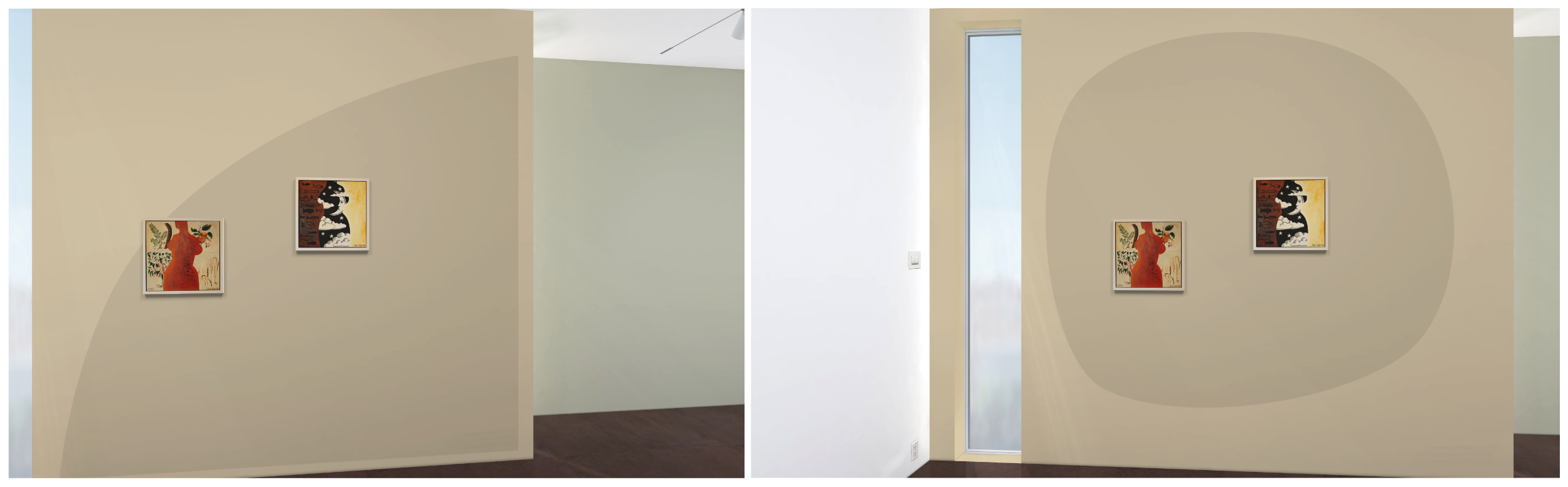
The virtual gallery becomes a design space where ideas can evolve. You can experiment, change your mind and try something entirely different, all from your laptop.
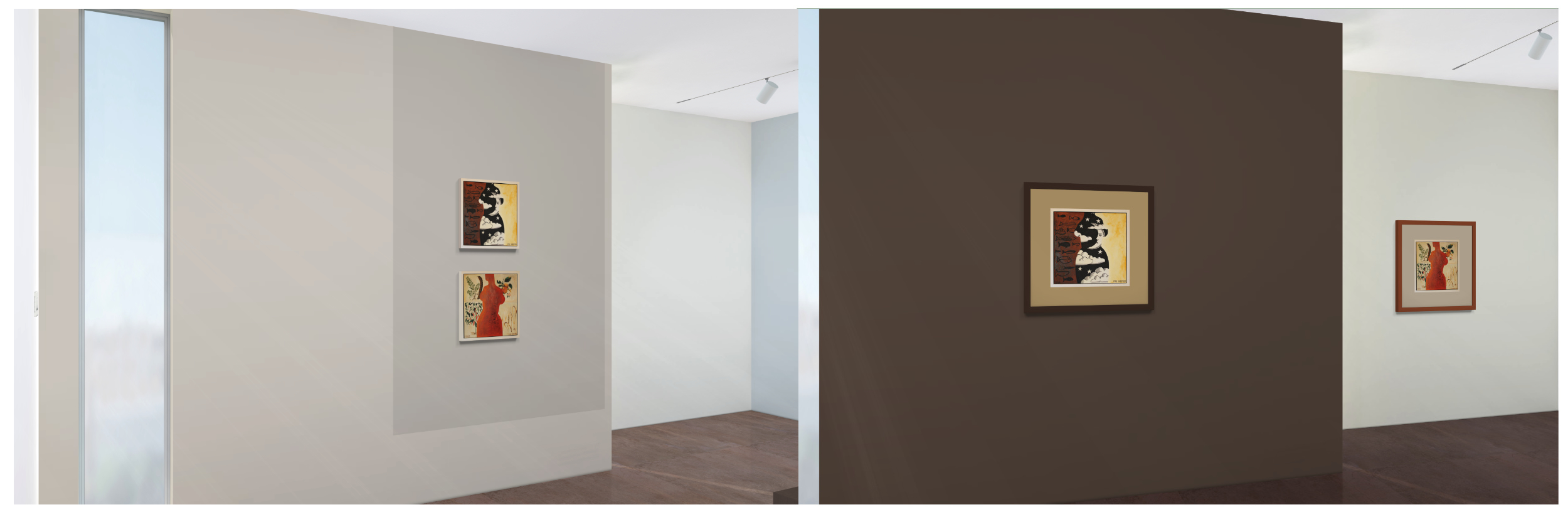
Moving through the gallery also reveals things that aren’t always apparent in a plan. You can assess sightlines between works, the balance of a wall when approached from different directions, and the rhythm of an exhibition as visitors move through it.
If you’re preparing a physical exhibition, this gives you an opportunity to resolve many of those decisions before the installation begins. You can try arrangements without repeatedly handling artworks, moving them around a physical gallery or discovering at the last minute that something needs to change. Ideas can be tested and revised quickly, without the time and disruption of making those changes on site.
For those working entirely in virtual reality, the same process offers a way to develop the exhibition itself, exploring the presentation and the visitor’s experience before making the show available to an audience.
Have you ever wanted to show a small selection of work to a collector as a private exhibition? A separate gallery space is ideal for this.
You can create a complete exhibition specifically for a collector or private group, by placing the artworks within a gallery environment where their scale and relationships can be appreciated. Instead of sending a collection of individual images, you’re inviting people into a space where they are actively engaged in viewing the artwork.
Password protection allows you to control who can visit. You might prepare a preview for established collectors before a wider release, or an artist could share a new body of work with a small group of interested people.
The presentation can be as carefully considered as a public show, with the selection and arrangement developed specifically for its intended audience. It provides a way to introduce work and encourage discussion without needing to organise a physical viewing.
Another gallery space can be used specifically for photography, video or other promotional material. With this in mind, you’re not necessarily trying to create a complete exhibition. You’re looking for the most effective way to present the work in an image or a short video. You might group several artworks together on one wall, give a single piece an entire room, or experiment with different wall colours and graphics to create a setting that best complements the work.
When positioning artworks, I find it useful to walk around the gallery and look for interesting viewpoints. A view across several walls, an asymmetrical arrangement or a closer view of a work can each provide a different perspective. Capture images from these viewpoints for use in an email, on your website or in other promotional material.
You can also record a video journey through the gallery. Select an artwork, then record the journey towards it. The resulting video can be edited or formatted in Canva for use across social media platforms.
With five separate gallery spaces, exhibiting, planning and promotion need not compete for the same environment. A public exhibition can remain available to visitors while the next show is being developed elsewhere. A private presentation or promotional setup can occupy another space without disturbing either. The virtual gallery is available not only when an exhibition is ready to open, but throughout the process of preparing, presenting and promoting art.
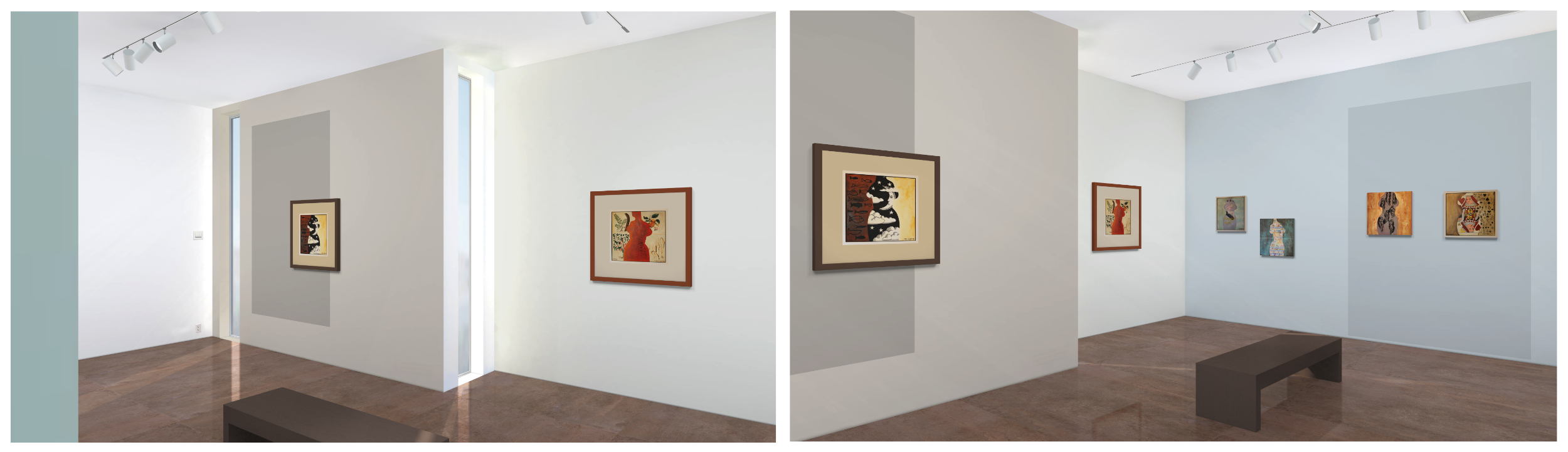
 Curate and manage your own virtual art gallery using our bespoke 3D exhibition software.