
Every visitor arrives with a different device, browser and level of confidence.
Some have explored virtual spaces before, while others are entering one for the very first time. If their first thoughts are “Why am I waiting”, “How do I move?” or “Why isn’t this working?”, their attention has already shifted away from the exhibition.
At Exhibbit, we believe technology should quietly support the viewing experience, not become the experience. Our role is to remove uncertainty so visitors can relax, explore with confidence and become absorbed in the artworks.
One of the first technical obstacles we are dealing with is how to deliver the gallery and all of its contents to you as quickly as possible, because nobody likes to wait! We understand that, and will continue to reduce load times as technology allows. Making good use of those six or so seconds load time makes sense. That is why the exhibition details and abstract are presented at this point.
It’s surprising how quickly time goes by when you have something to do.
The first few moments of any exhibition matter. Rather than expecting visitors to work everything out for themselves, every Exhibbit gallery begins with simple visual guides. These introduce the basic movements, explain how to discover additional information about artworks and help visitors understand the space around them.
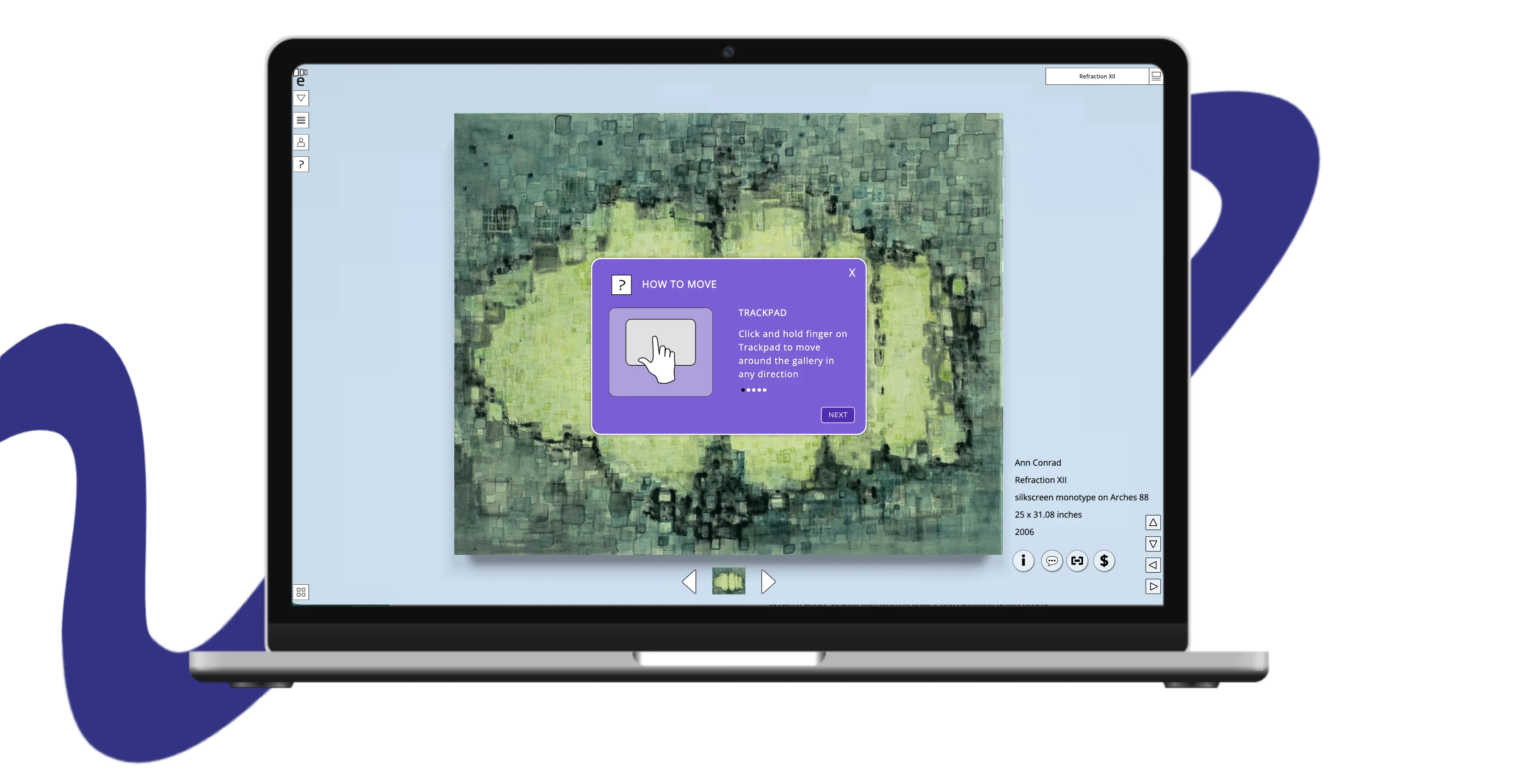
Once visitors understand a few simple controls, navigating the gallery quickly becomes intuitive. They stop thinking about how to move and start thinking about what they’re looking at. That’s exactly where their attention should be.
Visitors discover exhibitions from many different places. Some follow a link from a website, others arrive from an email invitation, while many first encounter an exhibition through Instagram or Facebook.
Each platform behaves a little differently. Some social media apps open websites inside their own browser, which can limit interactive experiences.
Rather than leaving visitors to solve these technical issues themselves, Exhibbit recognises how they have arrived and provides simple guidance when opening the exhibition in Chrome, Safari or another external browser. It’s a small detail that many visitors never notice, but that’s the point. The less they have to think about technology, the sooner they can enjoy the exhibition.
Some artworks invite a closer look. Visitors naturally step forward to examine details that aren’t immediately visible from across the room. We continue refining how people inspect artworks in Exhibbit so the experience feels more natural, particularly on mobile devices. In every gallery, visitors can walk around at their own pace.
Moving naturally through a gallery is only part of the experience. Looking closely at an artwork also needs to feel effortless, regardless of the device being used.
On desktop computers the WASD keys allow precise, close-up movement. On phones, laptops and tablets, a two-finger slide lets visitors explore different parts of an artwork while viewing it up close. These refinements may seem small, but they make it easy for visitors to focus on the artwork rather than the controls.
Great exhibitions often spark conversations. Visitors may want to invite a friend, share an exhibition with family or recommend it to a colleague while they’re still exploring.
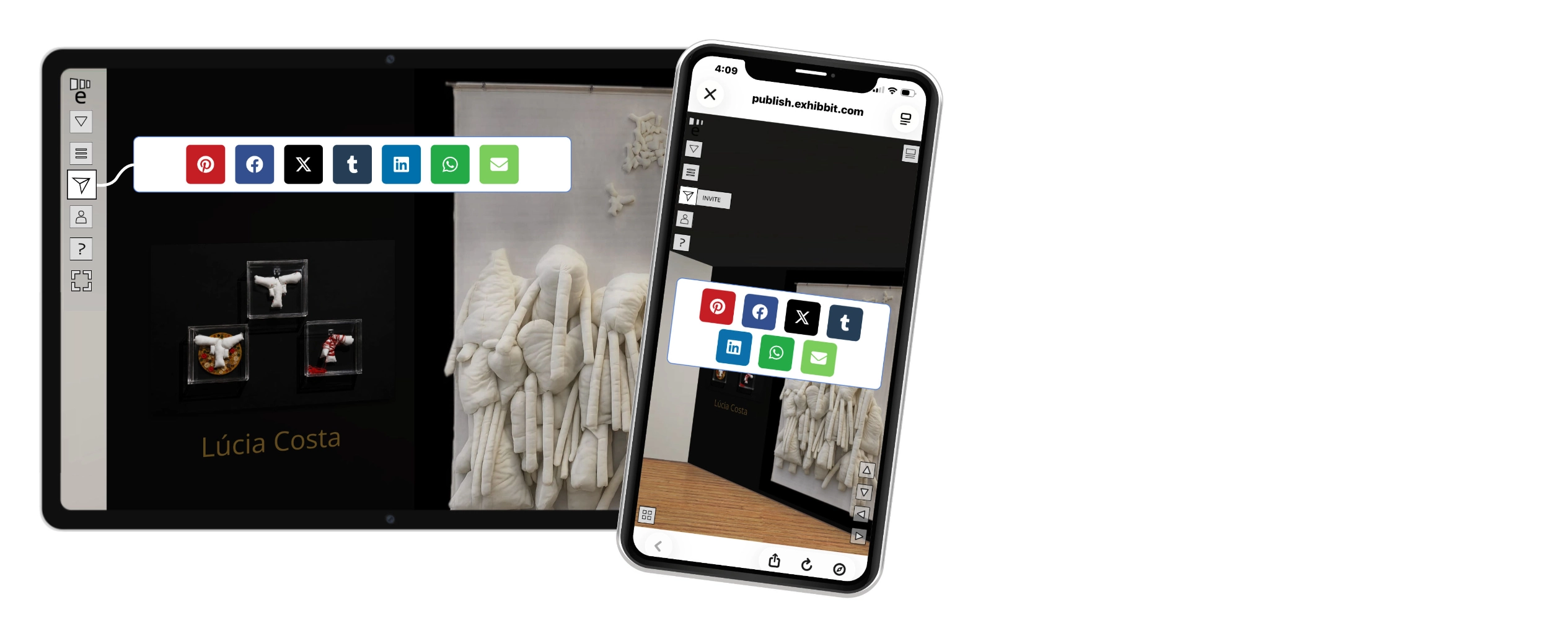
Instead of searching for links outside the gallery, Exhibbit includes an Invite button directly within the exhibition. Visitors can send invitations by email or share through social media without interrupting their visit.
Every hesitation interrupts the exhibition experience. Looking for a navigation button. Wondering why a link hasn’t opened as expected. Trying to work out how to inspect an artwork more closely. Each small distraction pulls attention away from the curator’s work. That’s why we invest so much effort in refining these seemingly small details. Individually they may only save a few seconds, but together they create an experience that feels natural and welcoming. When visitors remember the exhibition rather than how they navigated it, we know we’ve done our job.
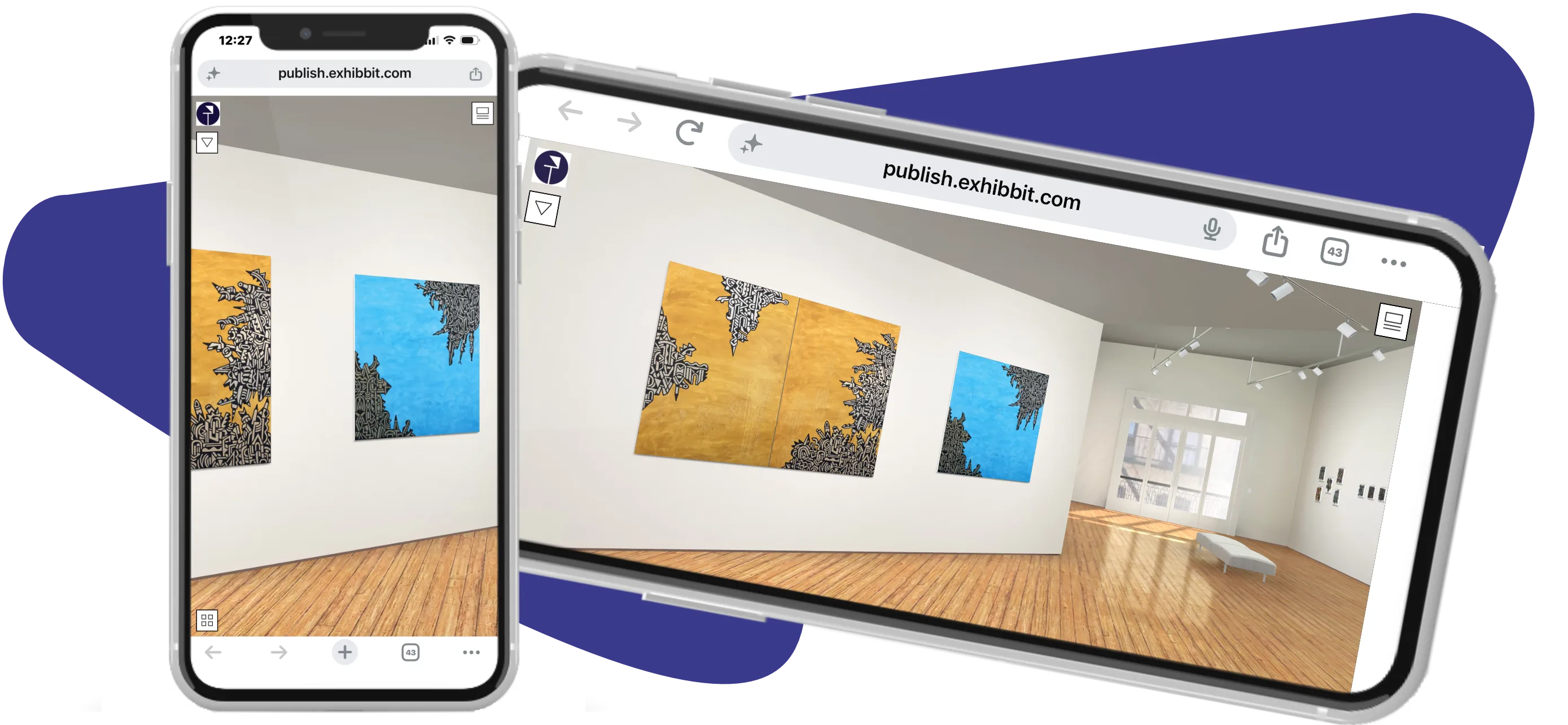
Given the small screen size it is surprising how engaging it is watching a video on your phone, the same applies to exhibitions. Rotating the phone into landscape orientation provides a wider view, with more of the exhibition to be seen across the room. Tap the down arrow to minimise the menu and, navigating with your forefinger, get lost in the art!
 Curate and manage your own virtual art gallery using our bespoke 3D exhibition software.