
The visitor may be arriving from a phone, a laptop or a large desktop screen, using a different browser and with very different levels of experience of virtual spaces. Some visitors will be familiar with navigating a 3D environment; for others, it may be their first. \
Our aim is to make those differences largely disappear.\
At Exhibbit, we believe technology should quietly support the viewing experience rather than become the experience itself.
That means paying attention to every part of the journey, including the moments before the exhibition has even appeared. The less visitors have to think about how the gallery works, the more attention they can give to what is actually there: the artworks in the exhibition.
The first is getting the gallery and its contents to the visitor as quickly as possible. We know that waiting interrupts the anticipation of seeing an exhibition, so we are continually working to reduce loading times as technology allows.\
But those few seconds can also become part of the arrival. Rather than presenting a progress bar while the gallery loads, Exhibbit uses this time to introduce the exhibition, presenting its title, details and abstract. Visitor’s can then begin to understand what they are about to see before the doors effectively open.\
The first few moments of an exhibition matter.
In a physical gallery, we are naturally guided by the architecture, the entrance, the position of the artworks and the way the exhibition is presented.
A virtual gallery needs to provide that same sense of orientation.That is why every Exhibbit gallery begins with simple visual guidance. Visitors are gently introduced to the few movements they need to explore the space, shown how to discover additional information about artworks and given a sense of what is possible within the gallery.
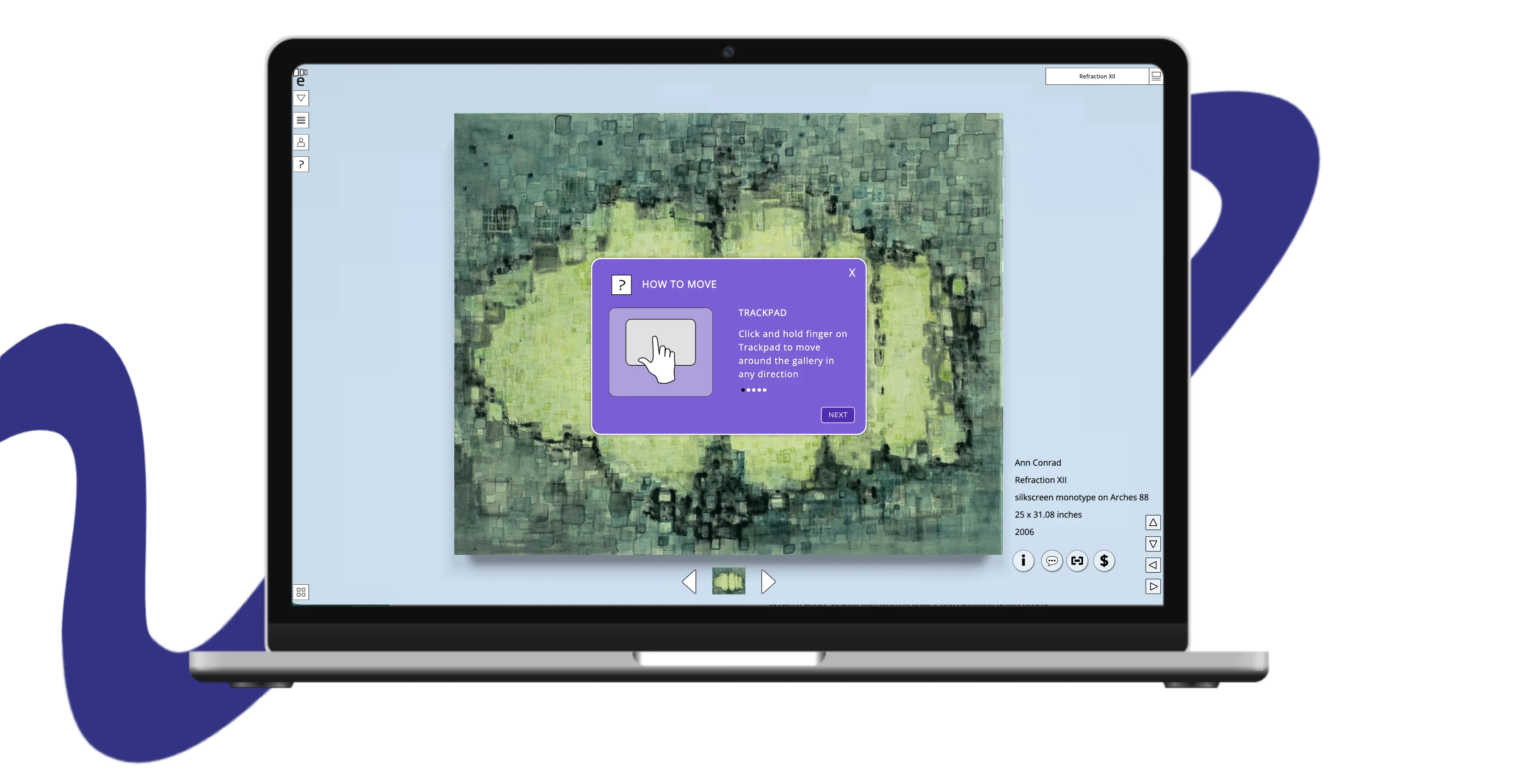
The aim is to give visitors enough confidence to begin exploring. After those first few moments, navigation becomes intuitive and the instructions can recede into the background.
Visitors no longer need to think about how they are moving through the gallery. Their attention can return to where it belongs, on the exhibition they have come to see.
An exhibition can begin in many different places. A visitor might follow a link from a gallery website, arrive through an email invitation, or discover the exhibition through Instagram or Facebook. Wherever that first encounter happens, we want the journey into the gallery to feel effortless.
The challenge is that not every route into a website behaves in quite the same way. Some social platforms open links within their own built-in browsers, which can affect how interactive experiences perform. Exhibbit takes care of this in the background. We recognise how a visitor has arrived and, when necessary, provide simple guidance to open the exhibition in Chrome, Safari or another browser where the full experience can be enjoyed.
Some artworks invite us to look more closely. We naturally step forward to examine a detail, a texture or a small element that may not be visible from across the room. In a physical gallery, this movement happens without thought. We simply move closer.
We want that same freedom in an Exhibbit gallery, whatever device a visitor happens to be using.
Visitors can explore the gallery at their own pace, pausing to examine artworks in more detail.
On desktop computers, the WASD keys provide precise movement for close-up viewing. On phones and tablets, a two-finger slide allows visitors to move across the artwork while viewing it at close range.
The technology responds naturally to the way people want to look, allowing visitors to slow down as they move closer and explore a detail.
Great exhibitions often spark conversation. A visitor may come across a work they know someone else would appreciate, want to show a particular artist to a friend, or share the experience with their family.
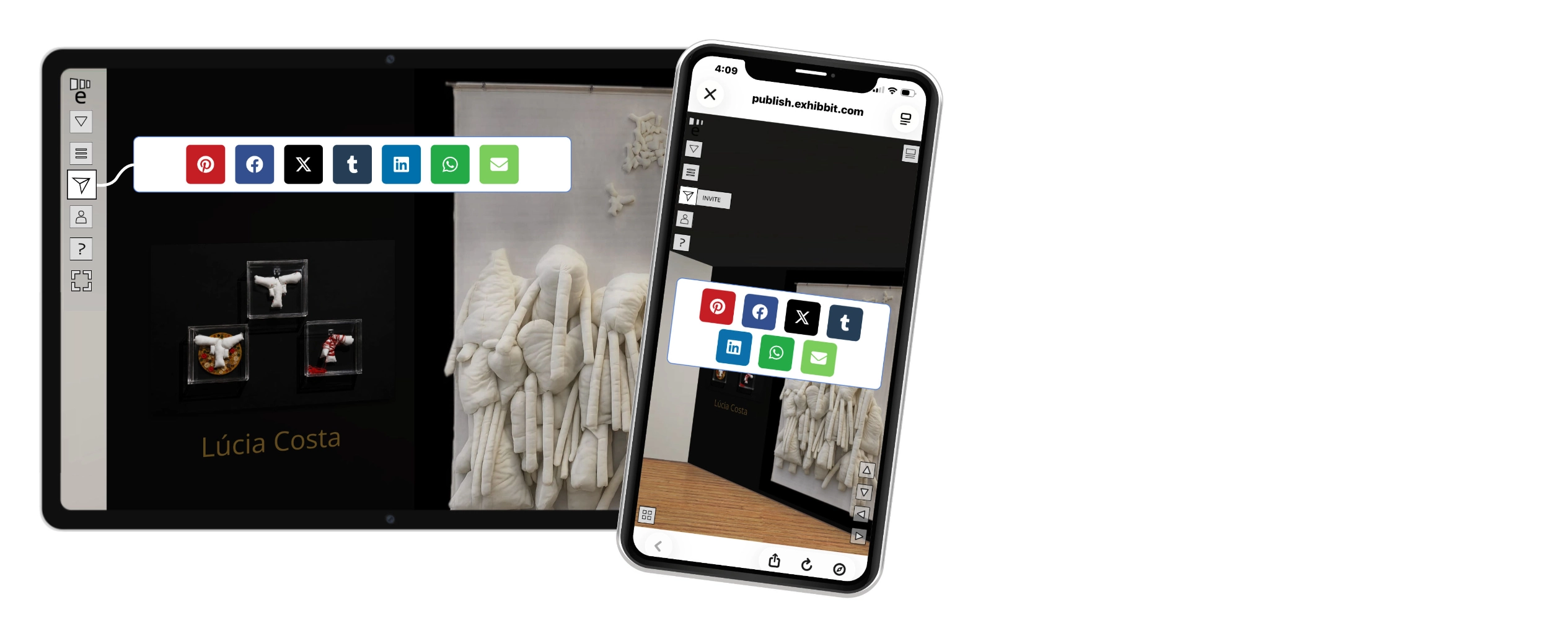
Exhibbit makes sharing the exhibition simple. An Invite button is available within the gallery, allowing visitors to send an invitation by email or share it through social media without having to leave the experience themselves.
When visitors become absorbed in the exhibition, spend time with the artworks and leave remembering what they saw rather than how they navigated the gallery, we know the technology has done its job.
An exhibition doesn’t have to wait for a visitor to be sitting in front of a large screen. Phones and tablets make it possible to enter an Exhibbit gallery from almost anywhere.
The larger view of a desktop screen is wonderful for exploring a gallery, but a phone can provide a surprisingly engaging way to experience an exhibition too. Turn the phone into landscape orientation and the wider view opens up, allowing you to look across the gallery and see more of the space.
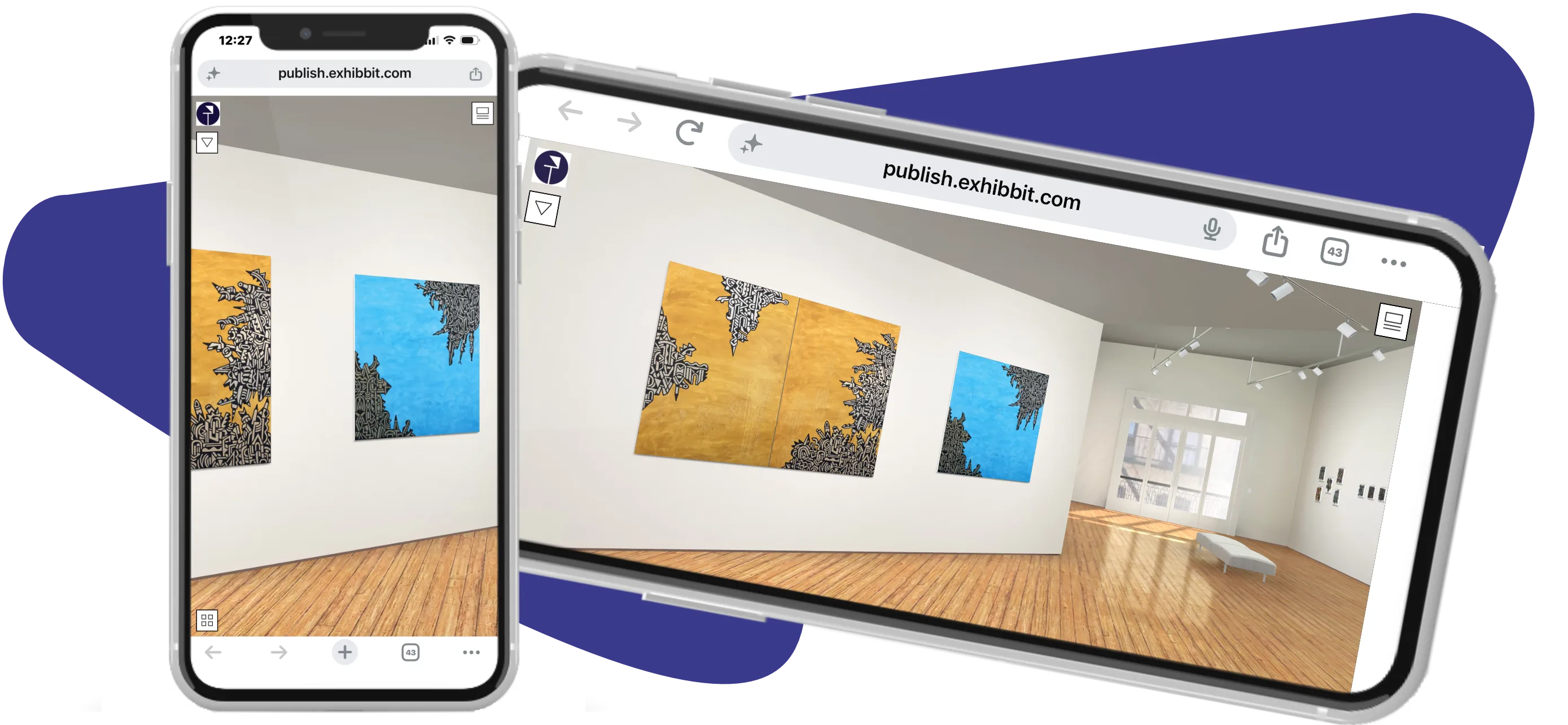
For an even cleaner view, tap the down arrow to minimise the menu. Then, using your forefinger to navigate, start exploring. The technology is in your hand, but it doesn’t have to be in your thoughts.
Just get lost in the art.
 Curate and manage your own virtual art gallery using our bespoke 3D exhibition software.